
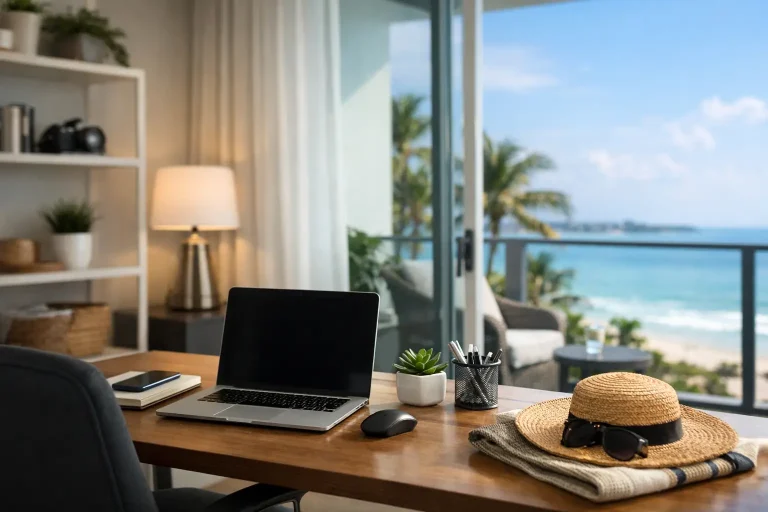
A beach trip can still include a few work calls, a project deadline, or an hour of email before the day begins. Knowing how to prepare condo workspace before you arrive helps you handle those obligations without turning your coastal getaway into a staycation at your desk. The goal is not to recreate the office. It is to create a small, comfortable setup that lets you work efficiently, close the laptop, and get back to the reason you traveled.
A condo is especially well suited to this balance. Compared with a standard hotel room, you typically have more room to spread out, separate work from sleep, and settle into a rhythm that feels less cramped. A little planning before check-in makes that extra space work even better.
How to Prepare a Condo Workspace Before Your Trip
Start with an honest look at what work will require during your stay. Someone answering a few messages needs a very different setup than someone leading video meetings, editing large files, or keeping regular business hours. Decide whether you need only a laptop and charger or whether a keyboard, mouse, headset, second screen, or printed materials will genuinely make the work easier.
Pack for the work you actually expect to do, not for every possible scenario. Overpacking tech can make a vacation feel like a temporary relocation. For many travelers, a laptop, charging cable, compact power strip, headphones, and a small notebook cover the essentials. If your work depends on video calls, add a headset with a microphone and any adapters your devices need. Bringing them from home avoids a frustrating search once you are settled in.
It also helps to prepare your files before you leave. Download documents you may need, confirm that important passwords are available through a secure method, and let coworkers know when you will be reachable. If you plan to work only in the morning, say so clearly. Setting that expectation before the trip protects your vacation time better than trying to negotiate it from a sunny balcony.
Confirm the details that matter to your work
Before booking or departing, consider the basics: reliable internet access, enough table or counter space, accessible outlets, and a layout that gives you a reasonably quiet corner. These details matter more than an elaborate office setup. A comfortable condo can support a productive work session, but it is wise to confirm your must-haves if your job has nonnegotiable technical needs.
For example, a traveler who needs to host client presentations may prioritize a private room and dependable video-call conditions. A parent checking in with work for 30 minutes while the family gets ready for the beach may simply need a table near an outlet. There is no single right setup. Match the space to your work, then keep the rest of the condo available for relaxing, sharing meals, and spending time together.
At Ocean Club South Condo Rental, the appeal is having a more residential setting for a coastal stay. That added breathing room can make a short work commitment feel manageable rather than intrusive, especially for families and longer-stay guests.
Choose a Workspace That Stays Out of Your Vacation
Once you arrive, resist the urge to open your laptop on the bed. It may seem convenient at first, but it blurs the line between work and rest and can leave you feeling as though you never really checked out. Look instead for a dining table, desk, kitchen counter, or other stable surface with a supportive chair nearby.
The best location is usually one that gives you enough focus without taking over a shared living area. If you are traveling with family or friends, a corner of the dining area may work well early in the morning, while a separate bedroom or quieter room may be better for a scheduled call. Speak up about your call times so no one is surprised when you need a little background quiet.
Light makes a difference, too. Natural light can make a workspace feel pleasant, but placing your screen directly in front of a bright window may create glare. Turn your desk or chair slightly, close blinds if needed, or use a lamp to create more even light. For video meetings, face a window when possible rather than sitting with the window behind you.
Keep your setup compact. Use a small bag or one end of the table for your work items, then put them away when your work block is over. That simple reset is a useful signal to yourself and everyone traveling with you: the workday is done.
Test Wi-Fi Early and Build a Backup Plan
Do not wait until two minutes before an important meeting to connect. After arrival, join the available network, test a webpage or video call, and make sure your laptop is fully updated. A quick test gives you time to adjust if something needs attention.
Even strong vacation-property internet can be affected by the number of connected devices, where you are sitting, or temporary service interruptions. For everyday browsing and email, this may never be noticeable. For a time-sensitive call, have a reasonable backup. Your phone’s hotspot can be useful if your mobile plan supports it, though coverage and data limits vary. Downloading key files ahead of time is another low-effort safeguard.
If you are sharing the condo with several people, ask whether anyone plans to stream, game, or join a video call at the same time. You do not need to police everyone’s devices, but a quick conversation can prevent unnecessary bandwidth pressure during a presentation. If your job involves confidential calls, use headphones and avoid discussing sensitive information in a common area.
Make the Setup Comfortable, Not Complicated
Vacation work is easier when your body is not fighting the furniture. Place the screen near eye level if you can, even if that means setting your laptop on a sturdy stack of books and using an external keyboard. Sit with your feet supported and avoid spending hours hunched over a coffee table. These small adjustments are especially helpful when a quick task becomes a longer-than-expected work session.
Noise is another practical consideration. Condos are designed for living, which means you may hear people making breakfast, children returning from the pool, or the pleasant activity of a shared vacation. Headphones can soften those distractions. For calls, choose the quietest available spot and let others know you need ten or twenty uninterrupted minutes.
A view of the water or a breezy outdoor area can be a wonderful place to read, plan, or write. It may not be the best setting for every task, though. Screen glare, wind, changing weather, and background noise can make calls difficult. Use outdoor space as a bonus when the task suits it, not as the only plan for your workday.
Set Work Hours That Protect the Trip
The most effective condo workspace is one you do not have to use all day. Choose specific work windows before the trip, ideally when they interfere least with the plans you care about. Early mornings often work well for beach vacations: answer messages with coffee, wrap up before the day gets busy, and leave afternoons open for the shoreline, pool, meals, or local plans.
If you need a longer block, schedule a true break afterward. Step outside, take a walk, or join your group for lunch. A change of scenery helps prevent work from quietly expanding into every open hour. It is also fair to be realistic. A traveler with fixed remote hours may need a more structured routine than someone taking a few vacation days with limited availability. Planning for that difference avoids disappointment.
For families, coordinate work time with the day’s rhythm. One adult might take a call while the other takes the kids to the beach, then switch later if needed. Multigenerational groups can often make this easier, but only if everyone knows the plan. Clear communication keeps work from becoming a source of friction in a space meant for togetherness.
When your final task is complete, pack the charger, close the laptop, and return the workspace to its vacation purpose. A condo gives you room to meet a responsibility without sacrificing the comfort of your stay. Use that flexibility well, and a short work session can remain just that – a small part of a relaxing coastal escape.